ICUSteps
Role
Lead Designer
Scope
UX/UI
Wireframes
Prototype
Design
Tools
Sketch
InVision
Figma
Year
2021
About
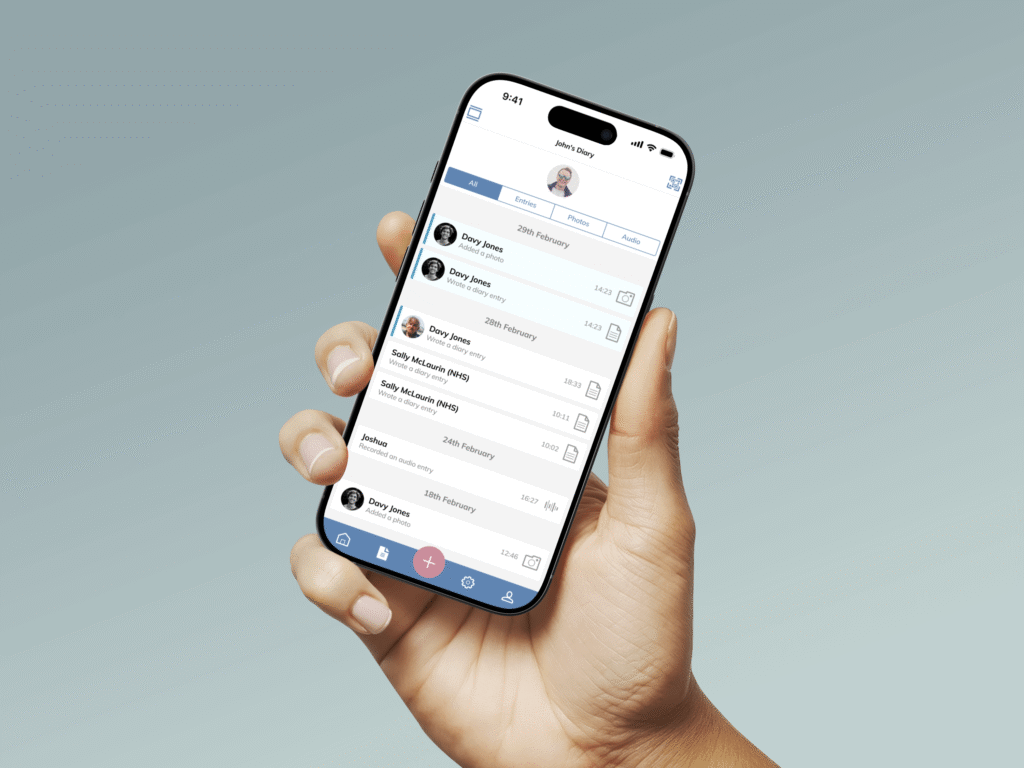
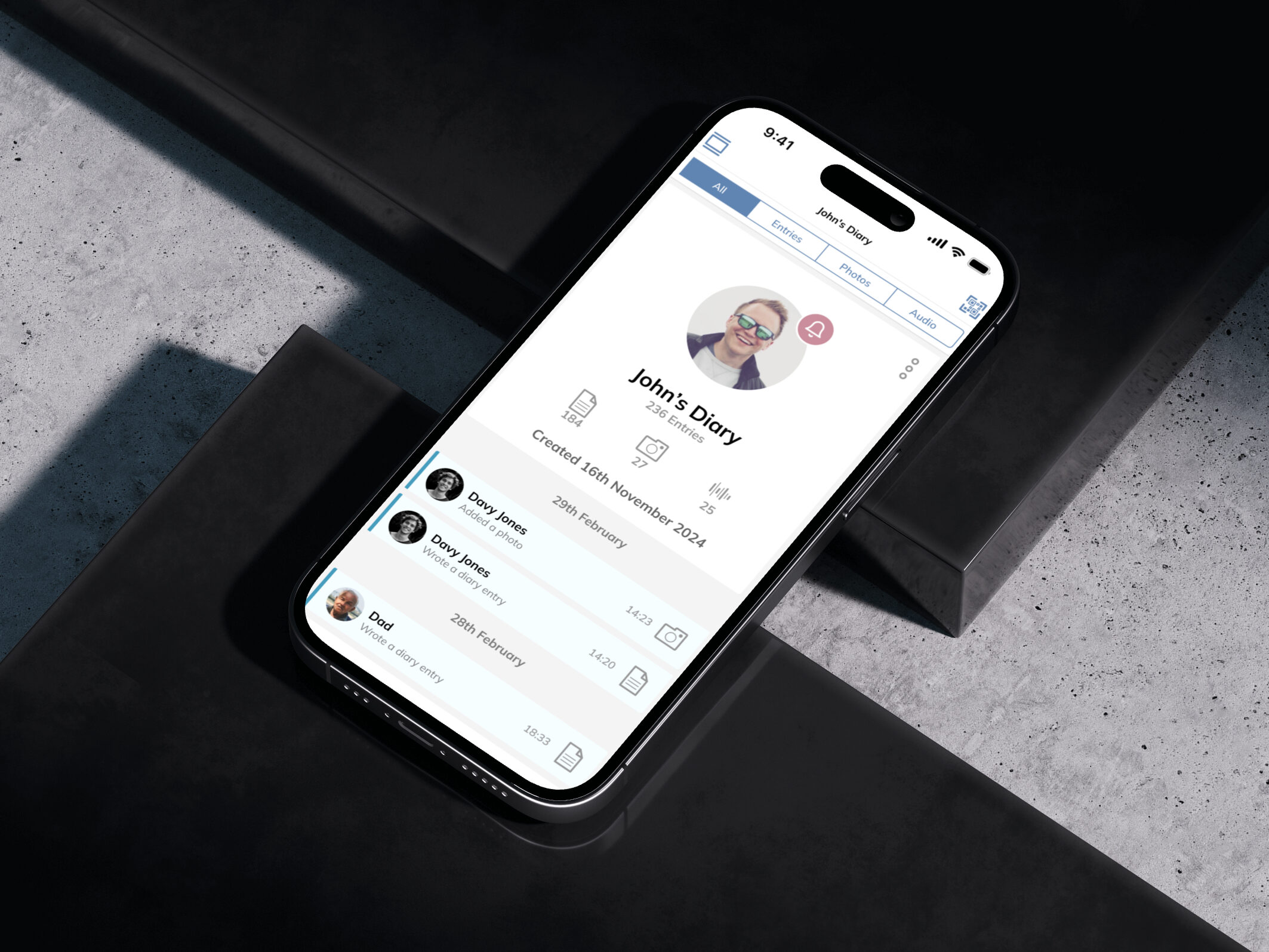
ICUSteps is a charity that supports patients who have experienced intensive care, as well as their families and loved ones. Traditionally, patient diaries are paper-based and used to record day-to-day events while a patient is in intensive care, helping them make sense of their experience during recovery. ICUSteps approached me to create a digital prototype of this diary, with the aim of modernising the experience and supporting a future funding bid.
Role
I led the UX and UI design of the ICUSteps Diary App, taking the project from early concept through to a functional prototype. My role included user experience design, interaction design and visual design, with a strong focus on accessibility, emotional sensitivity and ease of use. I worked closely with the charity to ensure the app reflected the needs of patients, families and clinical environments.

The Challenge
Designing for intensive care presents unique challenges. Users may be distressed, time-poor or unfamiliar with digital tools, and the environment itself is emotionally charged.
The app needed to feel calm, supportive and intuitive, while accommodating a wide range of users with differing levels of technical confidence. Crucially, the experience had to replicate the simplicity and immediacy of the existing paper diary without adding friction or cognitive load.
Approach
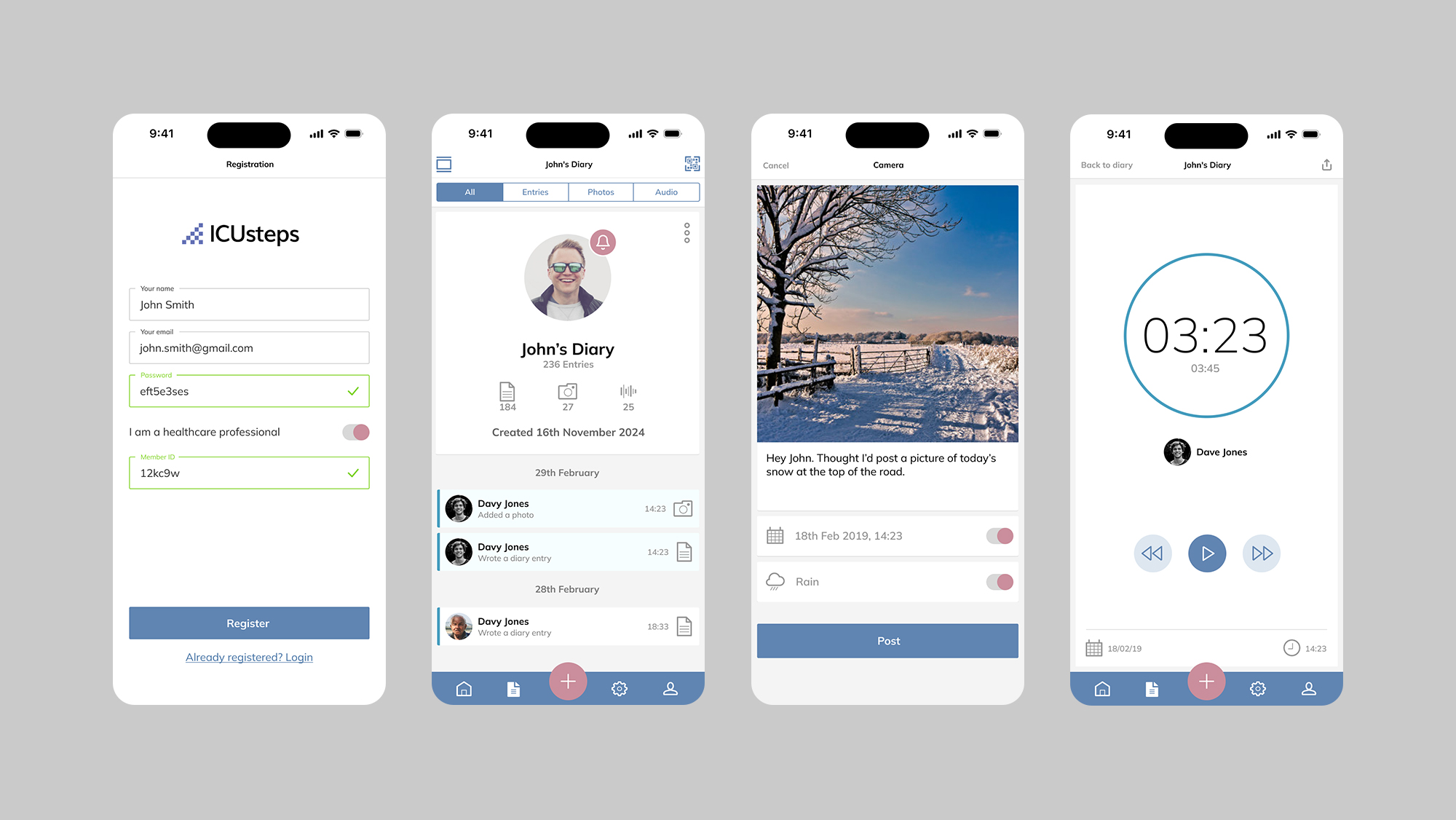
The app was designed as a mobile-first experience that prioritised clarity and ease of use. I closely modelled interactions on the existing paper diary, ensuring familiar patterns such as short daily entries, timestamps and simple prompts translated naturally into a digital format. This approach helped reduce the learning curve and made the experience accessible to all users, regardless of technical ability.
The digital format also introduced new opportunities, including the ability to add photographs and multimedia content, creating a richer and more personal record for patients to reflect on during recovery. Visual design was intentionally restrained, using soft colour palettes, clear typography and minimal interface elements to create a calm and reassuring experience.
Impact
The prototype demonstrated how a digital diary could enhance patient and family support while remaining sensitive to the realities of intensive care. It provided ICUSteps with a tangible vision for future development and funding, showing how thoughtful UX design can modernize healthcare tools without losing the human connection at their core.
On a personal level, the project was a deeply valuable exercise in designing for high-emotion contexts and diverse user needs. It reinforced the importance of simplicity, accessibility, and empathy in UX design, and expanded my experience in creating multi-user, sensitive digital tools that balance emotional and practical requirements.